









At the Intersection of Intellectual History and Sociology
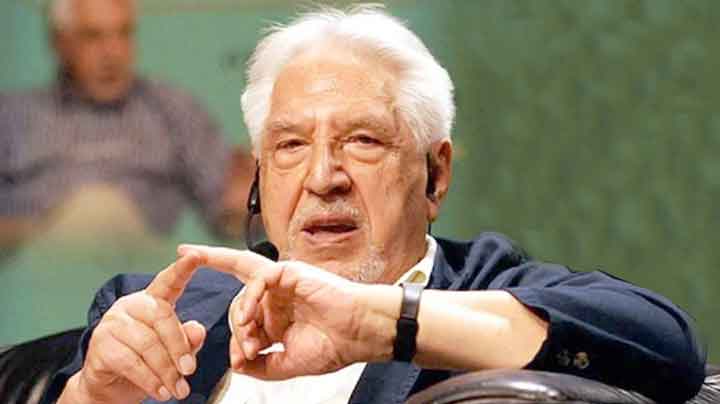
Şerif Mardin was a sociologist and political scientist who examined the modernisation process extending from the Ottoman Empire to the Republic through the relationships among ideas, institutions, social relations, and worlds of meaning. He differed from approaches in Turkey that explained political history solely through state decisions, reform movements, or ideological programmes; instead, he investigated within which social environments ideas were produced, how they entered circulation, and with what meanings they were adopted by different groups. In his work, intellectual history is not a chronology of great ideas developing independently of society. To understand the influence of a concept, one must also examine the institutions that carry it, forms of education, channels of communication, and its counterparts within everyday life.
Born in Istanbul in 1927, Mardin began his secondary education at Galatasaray High School and completed it in the United States. He studied political science at Stanford University, pursued graduate studies at Johns Hopkins University, and later completed his doctorate at Stanford. He began his academic career at Ankara University’s Faculty of Political Sciences in 1954 and later worked at institutions including Boğaziçi University, American University, and Sabancı University, teaching political science, sociology, intellectual history, and sociology of religion. In 2010, he received the title of professor emeritus from Sabancı University. He died on 6 September 2017.
Mardin’s doctoral research focused on the Young Ottomans, one of the principal movements of nineteenth-century Ottoman thought. Published in expanded form in 1962 as The Genesis of Young Ottoman Thought, the study did not approach figures such as Namık Kemal, Şinasi, and Ziya Paşa solely through their biographies or political preferences. It examined how the Young Ottomans reconstructed European concepts such as liberty, representation, public opinion, and constitutional government within Islamic and Ottoman political vocabularies. In doing so, Mardin demonstrated that ideas do not pass unchanged from one culture to another; they acquire new meanings through translation, interpretation, and political needs. This study was an early example of the basic method Mardin would continue to employ in his later work: reading political thought together with the historical and social environment that made it possible rather than limiting analysis to the contents of texts.
A continuation of this method, Jön Türklerin Siyasi Fikirleri 1895–1908, demonstrated that the opposition movements preceding the Second Constitutional Era did not constitute a single ideological whole. Although the Young Turks opposed the same political regime, they held different views concerning the state, society, the individual, centralisation, and social change. Rather than placing these differences within the categories of political camps constructed retrospectively, Mardin analysed them through the concepts and problems of their own period. One of his innovations in Turkish intellectual history was his refusal to read historical actors as incomplete or premature representatives of ideologies that would emerge only later.
Modernisation from the Ottoman Empire to the Republic
The fundamental problem connecting Şerif Mardin’s studies is how modernisation was experienced across different layers of society. He did not define modernisation as a linear process of progress beginning with the adoption of Western institutions. Reforms in law, education, administration, and science do not transform social values, religious language, and everyday life at the same speed. The state may establish new institutions, but whether those institutions are adopted by society depends upon the relationships they establish with existing worlds of meaning. The tension emerging in the transition from the Ottoman Empire to the Republic therefore arises partly from the fact that the existence of reform and its social reception do not always coincide.
This approach removes modernisation from the framework of a simple struggle between tradition and innovation. Tradition is not a set of rules transmitted unchanged from the past; it is reinterpreted under new conditions. Modernity likewise does not constitute a unified model entering society from outside. Different classes, professional groups, religious communities, and local groups establish relationships with modern institutions according to their own needs. Mardin’s sociology sought to understand how major transformations produce fragmented, unequal, and unexpected consequences within social life.
The state occupies an important place within this historical reading. In the Ottoman political order, central administration rested upon a strong administrative tradition positioning itself above social and local differences. While the palace, military-administrative cadres, and educated bureaucracy constituted the language of the centre, provincial communities, religious groups, local notables, and broad sections of the population lived within different networks of relations. Although the Republic broke radically with the Ottoman state in political and juridical terms, it inherited certain forms of the tendency to transform society from the centre. The continuity that interested Mardin was not the claim that the two regimes were identical, but the reproduction, under different conditions, of the distance between central administration and local social life.
This analysis is not a historical narrative that devalues Republican reforms or idealises the Ottoman order. While recognising that reforms produced broad transformations from education to law, Mardin separately investigated the ways in which these reforms were adopted by society. The establishment of an institution by law does not mean that the behaviours and values upon which it depends automatically become established. The history of modernisation must therefore be followed not only through official decisions, but also through intermediate spaces such as school, family, neighbourhood, religious community, the press, and everyday language.
Centre, Periphery, and Civil Society
Mardin’s name is most closely associated with the centre–periphery approach. Applying a conceptual distinction developed by Edward Shils to Turkish history, Mardin did not use the centre merely to mean the geographical capital or the location of state institutions. The centre was the field carrying political authority together with legitimate forms of knowledge, official culture, and the worldview of governing elites. The periphery, meanwhile, did not refer to a homogeneous mass of people outside the centre, but included local communities, religious circles, provincial powers, and social groups whose relationship with central culture was limited.
The relationship between centre and periphery should not be conceived as the permanent conflict of two immutable classes. Groups originating in the periphery may eventually enter the centre, transform its institutions, or carry their own values into the political sphere. The development of multiparty politics during the Republican period opened new possibilities for social demands originating in the periphery to influence the centre. The strength of the model lies not in explaining every event in Turkish politics on its own, but in drawing attention to the historical distance between the official language of the state and the ways of life of social environments. In Mardin’s own work, centre–periphery relations are presented as a “key” for understanding Turkish politics, not as a closed theory replacing the entirety of social structure.
The centre–periphery approach intersects with Mardin’s research on civil society. He notes that in Western Europe, cities, economic groups, the Church, local governments, and juridical associations created relatively autonomous spaces in relation to central power. Ottoman history did not follow the same institutional path. Intermediate powers possessing the same structure as European feudal estates and urban institutions did not emerge between the state and its subjects; instead, religious communities, religious structures, and local networks of relations created different forms of protection and solidarity. Rather than applying a concept developed in the West directly to Ottoman society, Mardin preferred to compare the historical conditions in which the concept emerged with the institutions found in Turkey.
His attention to the concept of civil society reveals a characteristic feature of his social-scientific method. For Mardin, concepts borrowed from Western thought cannot be used as universal and context-free tools. “Civil society” possesses a specific history in Europe associated with urban rights, property, juridical autonomy, and the limitation of central authority. When the same term is used in Turkey, one must separately investigate whether the social institutions that originally produced it are present. Conceptual transfer becomes explanatory only when such historical comparison is made.
Ideology, Religion, and Social Meaning
The concept of ideology plays a central role in Mardin’s movement from intellectual history toward sociology. He did not treat ideology merely as a collection of false ideas that distort reality. Human beings do not perceive the social world directly and without mediation; they interpret it through symbols, narratives, values, and previously acquired classifications. Ideologies produce intellectual maps that orient individuals within this complex world. During periods of accelerated social change, when older systems of meaning become inadequate, new ideologies provide people with integrated schemas through which events can be explained.
This perspective differs from explanations that treat ideas as simple reflections of material interests. Economic and political relations influence the formation of ideas, but ideas also shape human actions, affiliations, and expectations concerning the future. To understand the social influence of an ideology, one must examine not only its programme, but also which identity it offers people, which symbols it employs, and how successfully it explains the uncertainties of life. Mardin’s approach to ideologies as “cultural maps” establishes a reciprocal relationship between ideas and social change.
His studies of religion continue this approach to meaning. Mardin did not examine Islam as a remnant of the past expected to disappear with modernisation. Religion provides people with a moral language, social belonging, and an interpretation of life as a whole. As modern institutions develop, religious meanings may not disappear, but instead be reconstructed within new forms of communication, education, and organisation. This is why he does not explain the relationship between secularisation and religiosity through a one-directional schema of decline or rise.
Din ve İdeoloji investigates the relationship religion establishes with social structure, political behaviour, and cultural meanings, while Religion and Social Change in Modern Turkey examines how religious movements develop within modern society through the example of Said Nursi and the Nur movement. In this study, Mardin does not focus solely on the theological content of a religious doctrine; he considers which social needs it answers, how it creates a network of communication among followers, and how it relates to the problems of meaning produced by modernisation. The book brings together religion, reform, communication, intellectual transformation, and processes of social organisation within a single investigation.
Mardin’s sociology of religion also maintains a distance from interpretations that completely identify religion with politics. Religious symbols may provide resources for political movements, but the social function of religion extends beyond political mobilisation. It produces a field of meaning ranging from family relations and ethical behaviour to education and everyday solidarity. Without understanding this field, the social consequences of modernisation in Turkey remain incomplete. His studies attempt to demonstrate that religion does not survive outside modernity, but by transforming itself within the new conditions modernity produces.
Works and His Place in Turkish Intellectual History
Şerif Mardin’s works form a long line of research extending across intellectual history, political sociology, ideology, and sociology of religion. The Genesis of Young Ottoman Thought and Jön Türklerin Siyasi Fikirleri 1895–1908 are two fundamental monographs devoted to the intellectual actors of Ottoman modernisation. Din ve İdeoloji and İdeoloji examine the systems of ideas and symbols that construct society’s world of meaning. Religion and Social Change in Modern Turkey: The Case of Bediüzzaman Said Nursi approaches the place of religious thought within modern social change through a broad framework of historical sociology.
A significant portion of the books published under the titles Türkiye’de Toplum ve Siyaset, Siyasal ve Sosyal Bilimler, Türkiye’de Din ve Siyaset, Türk Modernleşmesi, and Türkiye, İslam ve Sekülarizm consists of articles written at different times and brought together thematically. This distinction should be preserved when evaluating Mardin’s works. His monographs develop particular research questions within the unity of a book, while the collected volumes reveal the range of his studies on centre–periphery relations, civil society, modernisation, religion, and political culture across different periods.
Mardin’s place in Turkish intellectual history becomes clear in his refusal to impose a ready-made ideological judgement upon the society he sought to explain. He did not read Ottoman modernisation through a simple opposition between tradition and progress, Republican history through a binary of state and people, or religion through a binary of reaction and liberation. By investigating the symbols through which social actors made sense of their own worlds, he contributed to the strengthening of an interpretive and historical line of sociology in Turkey.
Over time, the centre–periphery approach was detached from its academic context and transformed into an explanation of two permanent political identities opposed to one another. Yet the original direction of Mardin’s research was not to bind classes and social groups to immutable essences, but to investigate how the relationship between state institutions and society’s worlds of meaning changed over time. The same care appears in his studies of ideology and religion: concepts are not left as abstract definitions, but examined together with the people, institutions, and forms of communication that carry them.
Conclusion
Şerif Mardin was an intellectual historian and sociologist who reconstructed Turkey’s history of modernisation through the social life of ideas. His work demonstrates that political transformation is not completed through laws and institutions alone; it must acquire new meanings within society’s values, symbols, and everyday relations. His studies, extending from the Young Ottomans and Young Turks to centre–periphery relations, civil society, ideology, and religious movements, converge around the same question: Through which intellectual maps do people make sense of historical transformations?
Mardin did not construct a philosophical system as a philosopher, but developed a historical and interpretive social science aimed at explaining Turkish society. His place within the History of Turkish Philosophy and Thought arises from the relationship he established between philosophical concepts and social processes. He did not leave ideas enclosed within texts; he investigated the environments that produced them, the institutions that carried them, and the meanings they acquired within everyday life. In this way, he approached Turkey’s intellectual history not merely as the history of ideas, but as the history of the society that lives through those ideas.


