




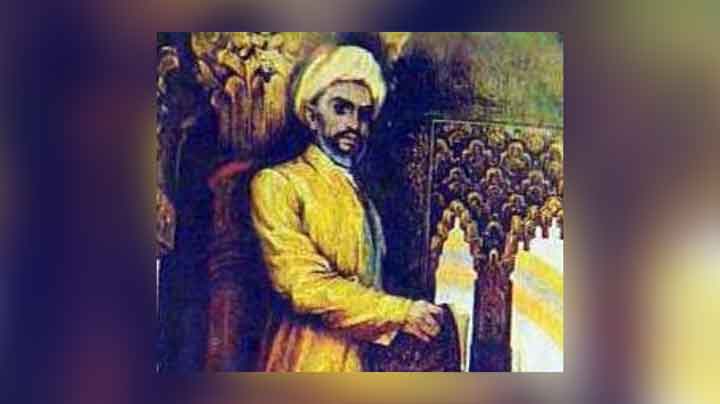
Yusuf Has Hacip is regarded as one of the founding figures of the history of Turkish thought through the Kutadgu Bilig, which he wrote in the eleventh century. His importance does not derive solely from having written one of the great works of early Turkish literature. Yusuf Has Hacip developed an integrated body of thought concerning human happiness, the legitimacy of political power, the place of justice within the order of the state, the relationship between knowledge and moral action, and the ruler’s responsibility toward the people.
Information about his life is quite limited. A significant part of what is known derives from the prose and verse introductions later added to the Kutadgu Bilig and from certain couplets within the work itself. It is generally accepted that he was born in Balasagun, received a good education, began writing his work there, and completed it in Kashgar. His year of birth is uncertain; although approximately 1019 has been proposed on the basis of certain expressions in the text, this date should not be treated as a definitive biographical fact.
Yusuf completed the Kutadgu Bilig in 1069–1070 after approximately a year and a half of work and presented it to the Karakhanid ruler Tavgaç Uluğ Buğra Han. After the ruler received the work favourably, Yusuf was given the title “Has Hacip,” one of the important offices of the court. Thus Yusuf of Balasagun came to be known historically as Yusuf Has Hacip.
Was Yusuf Has Hacip a Philosopher?
To define Yusuf Has Hacip solely as a poet, statesman, or author of a mirror-for-princes text narrows the intellectual scope of the Kutadgu Bilig. Yet presenting him as an academic and systematic philosopher in the modern sense would also distort his historical context.
His thought is a teaching of life in which ethics, politics, conceptions of the human being, knowledge, language, society, and the state are interconnected. Yusuf Has Hacip does not construct an abstract metaphysical system; he proceeds from the human being’s position in the world, actions, and responsibilities within society. His fundamental question is how a person can attain the good and happiness in both individual and social life.
In this respect, Yusuf Has Hacip should be approached as a thinker of ethics and politics within the history of Turkish thought. His poetic mode of expression does not stand in opposition to concepts. On the contrary, he constructs his thought through representative figures, dialogues, and dramatic encounters.
The Fundamental Question of the Kutadgu Bilig
The title Kutadgu Bilig is generally rendered as “knowledge that brings happiness,” “knowledge of felicity,” or “knowledge of blessedness.” Yet the word kut in the work does not refer merely to individual happiness. Kut encompasses a broader range of meanings including felicity, fortune, political authority, sovereign power, and legitimate rule.
The fundamental question of the work is therefore not simply “How can a human being become happy?” Yusuf Has Hacip also pursues questions such as these:
How can a government become just? Upon which principles should political power rest? How can knowledge, reason, and virtue be united within the order of the state? What responsibilities does the ruler have toward the people, and the people toward the state? How can a human being participate in worldly life while preserving an awareness of death and final destiny?
The Kutadgu Bilig develops these questions through the relationships between individual and society, ethics and politics, worldly life and the consciousness of death. The work consists of approximately 6,645 couplets, written in Karakhanid Turkish and in the form of a masnavi.
Four Figures, Four Fundamental Concepts
Yusuf Has Hacip constructs his thought around four principal figures. These figures are not merely characters within the narrative; each represents a fundamental principle of political and ethical order.
Kün Togdı is the ruler and represents right law, justice, or köni törü. The continuity of the state depends not upon the ruler’s personal desire, but upon the principles of righteousness and justice.
Ay Toldı is the vizier and represents kut, happiness, and fortune. Yet happiness is changeable; it rises, diminishes, and can pass from one person to another. His name, evoking the waxing and waning of the moon, indicates that political fortune is not permanent.
Ögdülmiş, the vizier’s son, represents reason. He argues that the order of the state must rest not only upon good intentions, but upon reason operating through knowledge.
Odgurmış is the ascetic and represents the final outcome of life, mortality, and the end awaiting the human being. His presence reminds those absorbed in state affairs and worldly concerns of the inevitability of death.
These four concepts are not independent of one another. The dialogues among justice, kut, reason, and final destiny constitute Yusuf Has Hacip’s intellectual method. The good life does not arise from the domination of a single principle; it requires these principles to be brought together in a balanced relationship.
Justice and Political Power
The ruler occupies the centre of Yusuf Has Hacip’s political thought. Yet the ruler’s power is not conceived as unlimited personal authority. What makes a ruler a ruler is not simply the capacity to govern, but the responsibility to realise justice.
Justice is not a moral quality added to government afterwards; it is the constitutive principle of political order. If law loses its righteousness, the state also loses its legitimacy. The ruler is responsible for ensuring the security, welfare, and order of the people. Harshness, arbitrariness, and self-interest toward the people are not merely personal defects of the ruler, but political errors that damage the order of the state.
Within this conception, power is more a duty than a privilege. The ruler’s value comes not from the office he possesses, but from the virtues through which he exercises it. Knowledge, righteousness, patience, generosity, compassion, and moderation are among the necessary qualities of government. Studies of the Kutadgu Bilig likewise emphasise that one of the principal aims of the state in the work is to secure justice together with the safety and welfare of the people.
The Relationship Between Knowledge and Action
In Yusuf Has Hacip’s thought, knowledge is not merely an intellectual acquisition. To know is a condition of acting correctly. Reason orders knowledge, while knowledge directs human actions.
Although a necessary connection is established between being knowledgeable and being virtuous, possessing knowledge alone is not sufficient. Knowledge has no political or ethical value unless it becomes action. A ruler must not merely know what justice is, but must apply it in decisions. A human being must not merely recognise goodness, but must transform goodness into action.
Within this structure, bilig and ukuş are not identical concepts. Bilig refers to the field of acquired knowledge and wisdom; ukuş refers to the capacity to understand, distinguish, and use knowledge appropriately. Without reason, knowledge remains disordered; without knowledge, reason cannot find its direction. Action is the field in which both are tested within ethical and political life.
Language, Speech, and Thought
In the Kutadgu Bilig, language is not treated merely as a means of expression. Yusuf Has Hacip discusses both the benefits and dangers of speech, and how human beings gain value or expose themselves to danger through language. It is not accidental that the opening sections of the work turn to the virtues and defects of language after discussing knowledge and reason.
Speech places the human being in relation with others and participates in the construction of political and social order. Yet immoderate speech can harm both the individual and the state. Speaking therefore becomes an ethical act. When one should speak, what should be said, and how speech should be measured all become matters of reason.
Yusuf Has Hacip’s decision to write in Turkish is also important in this respect. The work demonstrates that Turkish is not merely a language capable of expressing everyday life or poetic emotions; it possesses an intellectual structure capable of carrying concepts such as justice, reason, knowledge, virtue, political power, and the final destiny of the human being.
The Tension Between Worldly Life and Final Destiny
The Kutadgu Bilig is not merely a work praising active state service and social life. The thought of final destiny represented by Odgurmış continually recalls the transience of worldly success.
While Ögdülmiş defends participation in society, the assumption of responsibilities, and the improvement of worldly order through reason, Odgurmış turns toward withdrawal from worldly life. Yusuf Has Hacip does not simply reconcile these two positions. He preserves the tension between social responsibilities and the knowledge of death.
If a human being withdraws completely from the world, social responsibilities cannot be fulfilled. Yet if one lives solely in pursuit of office, wealth, and fortune, one forgets mortality. The good life requires fulfilling worldly responsibilities while knowing that they are not absolute. Political activity and ethical inwardness thus confront one another within the same structure of thought.
Yusuf Has Hacip’s Place in the History of Turkish Thought
Yusuf Has Hacip is one of the first major thinkers of the Turkish written culture that developed after the adoption of Islam. The Kutadgu Bilig brings together the older Turkish tradition of statecraft with Islamic ethics, the mirror-for-princes tradition, and a new conception of knowledge. Yet the work is not merely a compilation in which different sources are placed side by side. Yusuf Has Hacip reconstructs these elements within his own conceptual and literary order.
His fundamental contribution lies in refusing to separate the state from ethics. Human beings, society, and political power are parts of the same order. The individual’s lack of virtue spreads into social relations; the ruler’s ignorance and injustice spread across the entire state. Happiness becomes possible only when right law, reason, knowledge, and measured action are brought together.
In this respect, Yusuf Has Hacip is not merely a court writer offering advice to rulers. Through Turkish, he becomes a founding thinker of ethics and politics who reflects upon how human beings should live, how political power should be limited, and according to which principles society should be organised.
Works
The principal work definitively attributed to Yusuf Has Hacip and preserved to the present is:
Kutadgu Bilig — completed in 1069–1070, a poetic work of thought addressing ethics, politics, knowledge, language, the state, and human life.
No other known work of his has survived. Information concerning his life and intellectual personality is likewise constructed largely through the Kutadgu Bilig.
Conclusion
In Yusuf Has Hacip’s thought, human happiness is not merely personal tranquillity. Happiness is a comprehensive order of life constituted through just law, knowledgeable government, rational action, measured speech, and awareness of death.
In the Kutadgu Bilig, the state cannot be separated from ethics, ethics from knowledge, knowledge from reason, or worldly life from the thought of final destiny. It is this integrated structure that makes Yusuf Has Hacip one of the starting points of the history of Turkish philosophy and thought.
