




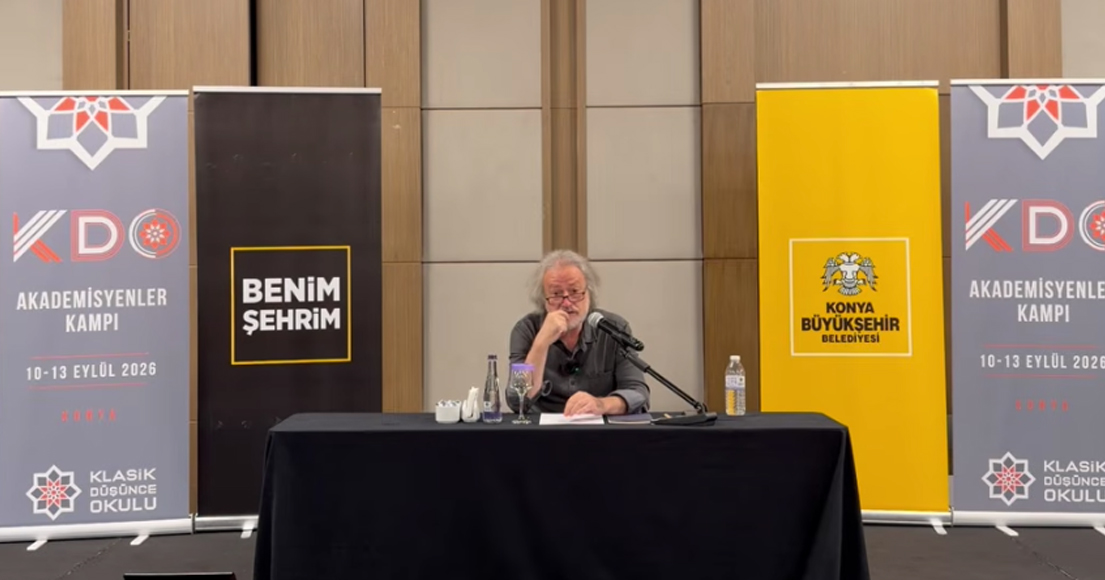
In his reading of Plato, Oğuz Haşlakoğlu places psychē at the center of philosophical activity, explaining the immortality of the soul in relation to anamnesis, virtue, and cosmic teleology. The forgetting that accompanies embodiment becomes, through philosophy, a process of recollecting truth and directing the soul toward its own perfection.
In Oğuz Haşlakoğlu’s interpretation of Plato, the immortality of the soul is not an independent metaphysical problem within Platonic philosophy. The relationship between psychē and philosophia constitutes a fundamental determination of what philosophical activity itself means. To consider the immortality of the soul in Plato, therefore, requires investigating the conditions of possibility upon which philosophy rests before addressing the question of whether life after death is possible. In Haşlakoğlu’s interpretation, Socratic-Platonic philosophy is not an abstract exercise in reasoning conducted through texts, but an experiential process of transformation that takes place directly within and through the soul itself.
In the circular model used to explain this structure, psychē occupies the center, while philosophia is the activity taking place in the surrounding field. The central position of the soul is significant because Plato’s fundamental concern is not merely that human beings possess correct propositions, but that the soul attain an understanding of its own reality and origin. The aim of philosophy is therefore not the accumulation of knowledge, but the soul’s emergence from a condition of forgetting through the recollection of truth. The doctrine of the soul’s immortality is consequently not a belief added to philosophy from outside, but the foundation that determines the meaning of philosophical activity.
Psychē and the Centrality of Philosophia
One of the fundamental distinctions Haşlakoğlu draws between Plato and the subsequent philosophical tradition concerns the location of the center of philosophical activity. He argues that while psychē occupies this central position in Socrates and Plato, the emphasis shifts toward nous, or intellect and intellectual activity, with Aristotle. This distinction does not merely concern a change in terminology; it expresses a different understanding of the nature of philosophy itself.
In Plato, philosophy is an activity concerned with the condition of the soul. Knowing truth is not simply a matter of correctly apprehending an external object; it also requires a transformation in the mode of existence of the one who knows. The question of what the soul is cannot therefore be resolved solely as a definitional metaphysical problem. As Haşlakoğlu emphasizes, although Plato’s dialogues contain extensive discussions of the soul, the question “What is the soul?” does not culminate in a conventional definition of its essence. Knowledge of the soul is associated not merely with a conceptual description, but with its direct contemplation.
Within this approach, psychē is not an abstract metaphysical assumption. The soul is the source of movement, or kinesis, and is understood as an active, moving, and living power. The Platonic doctrine of the soul therefore concerns more than speculation about an invisible element residing within the human body. It investigates the foundation upon which life, movement, and the human relationship to truth become possible. In Haşlakoğlu’s interpretation, the privileged position of the soul within Plato’s philosophical system derives precisely from this understanding.
The Immortality of the Soul and the Aim of Philosophical Activity
In Haşlakoğlu’s interpretation, the ultimate aim of philosophia is for the soul to attain an understanding of its own immortality. The doctrine of psychē athanatos, the immortal soul, explains why philosophy is an activity of transformation. Human beings do not enter the world as beings entirely unfamiliar with truth. The condition of coming into the world as a human soul is that the soul has already witnessed truth before embodiment. Embodiment, however, brings with it the forgetting of this prior experience. Consequently, the starting point of philosophical life is not merely ignorance but forgetting. Human beings are distant from truth not because they have never known it, but because they have forgotten what they once knew. The task of philosophy is therefore not to provide an entirely new content from outside, but to enable the soul to reestablish its relationship with its own origin.
This understanding determines the teleological character of the Platonic system. The cosmos and human life are not situated within a purposeless process of becoming; rather, there is a cosmic order that makes it possible for the soul to attain its own perfection. Philosophy becomes necessary insofar as it enables the soul to understand its place within this order and realize its potential for perfection. In Haşlakoğlu’s interpretation, psychē is not simply one element within the system; it is the center that makes the meaning of philosophical activity possible. If the immortality of the soul is removed from the system, the function of virtue in directing the soul toward truth, together with the significance of earthly life as a process of perfection, also loses its foundation.
Anamnesis: From Forgetting to Recollection
At the center of Platonic thought, anamnesis is not, in Haşlakoğlu’s interpretation, a simple operation of memory. Anamnesis is the soul’s renewed apprehension of its own true origin. The concept therefore cannot be understood independently of the doctrine of the soul’s immortality.
Embodiment is associated with amnesia, or forgetting. Upon entering the world, the soul forgets the truth it previously witnessed and becomes indifferent to its own origin amid the appearances of the sensible world. Anamnesis is the overcoming of this condition of forgetting. Haşlakoğlu draws attention to the structure of the term: amnesia designates forgetting, while anamnesis expresses the negation of forgetting. At the center of this interpretation stands mnēmē. Here, mnēmē is not merely psychological memory, but recollection of the soul’s original relationship with truth. Anamnesis therefore does not resemble the mental retrieval of individual events experienced in the past. What is recollected is not a particular worldly experience, but the soul’s prior witnessing of truth. Philosophical education thus becomes not the addition of new pieces of information to the mind, but the overcoming of the condition of forgetting that conceals the soul from itself.
The allegory of the cave is one of the most powerful expressions of this structure. The human being within the cave mistakes shadows for reality; the problem is not simply that the person sees the wrong objects, but that the direction in which truth is to be found has been forgotten. Leaving the cave does not merely involve gathering more accurate information within the same field of appearances; it requires turning in an entirely different direction. The movement Haşlakoğlu describes through the concept of periakdeon, understood as a change of scene, signifies a reorientation of the human relationship to truth. Philosophical movement is thus understood as a transformation from doxa to alētheia, from appearance to truth, and from amnesia to anamnesis.
Virtue and the Path of Recollection
The relationship between anamnesis and aretē, or virtue, determines the ethical dimension of Platonic philosophy. In Haşlakoğlu’s interpretation, virtue does not merely mean exhibiting good behavior in society or following a set of moral rules. Virtues are the possibilities through which the soul recollects the truth it has forgotten and turns toward its own true nature. There is therefore a constitutive relationship between virtue and knowledge. In the Socratic-Platonic context, the inseparability of knowledge and virtue arises because ethical conduct and the knowledge of truth are different dimensions of the same process of transformation. The question of whether virtue can be taught is consequently not limited to whether moral education is possible; it also concerns whether the soul can be brought out of its condition of forgetting and redirected toward truth.
The concept of perfection becomes decisive at this point. Platonic teleology is not primarily concerned with increasing human success in worldly affairs, but with the soul’s progress toward its own perfection. Through virtue, the soul establishes a distance from the deceptions of the sensible world and approaches an understanding of its immortal nature. Ethics thus ceases to be an independent doctrine of conduct separated from metaphysics and becomes the practice through which the soul reestablishes its relationship with truth.
Haşlakoğlu’s circular model also becomes clearer in this context. While psychē occupies the center, the circumference represents perfection, the teleological goal. Philosophia is the activity through which the soul at the center traverses this field and directs itself toward perfection. This movement concerns not so much the acquisition of a quality external to the soul as the renewed recognition of its own truth and the origin to which it belongs.
The Myth of Er: Destiny, Choice, and Responsibility
The Myth of Er, which appears at the end of Plato’s Republic, presents the relationship between the immortality of the soul and moral responsibility within a cosmic framework. Before entering new lives, souls choose among different forms of existence. Once a life has been chosen, its fundamental pattern is established; yet this does not eliminate human moral responsibility. In Haşlakoğlu’s interpretation, the decisive point is the declaration by the profetes, who addresses the souls, that God is blameless. The soul itself makes the choice, and responsibility for that choice belongs to the soul. The Platonic cosmic order therefore does not constitute a rigid fatalism. The fact that life possesses a certain pattern must be distinguished from human freedom in relation to virtue.
Regardless of which life is chosen, the possibility of establishing a relationship with virtue remains within that life. This condition makes the soul both free and responsible. Human beings may not determine all the circumstances in which they find themselves, but they remain responsible for how they relate to truth and virtue within those circumstances. Cosmic justice thus becomes not the opposite of freedom, but an order in which freedom is joined to responsibility.
For this reason, the Myth of Er connects the immortality of the soul not merely with the idea of life after death, but also with the consequences of choice, virtue, and moral obligation. The movement of the soul through different lives expands the ethical dimension of the Platonic teleological structure: human actions during earthly existence form part of the soul’s broader process of perfection.
The Phaedo and Philosophy in the Face of Death
One of the dialogues in which the doctrine of the soul’s immortality is discussed most extensively is the Phaedo. Socrates has been condemned to death, and on the final day before drinking the hemlock, he discusses with his companions whether the soul continues to exist after death. This dramatic setting takes the problem of the soul’s immortality beyond an abstract metaphysical debate. Socrates confronts the most immediate existential consequence of the position he defends. One of the points Haşlakoğlu emphasizes is that even Socrates’ closest companions are not easily convinced of the soul’s immortality. Plato does not present immortality as a belief that must be accepted without question. The dialogue proceeds through objections, doubts, and different forms of argument; Socrates’ task is not merely to transmit a doctrine, but to subject thought to repeated examination.
In this context, Plato’s analogies should not be regarded as merely literary ornaments. Haşlakoğlu understands them as analogon, forms of demonstration operating through a shared logos. An analogy does not simply establish a superficial resemblance between unrelated things; it reveals a common rational structure within different phenomena. Thus, a simple opposition cannot be established between Plato’s mythical, analogical, and dialogical language and philosophical demonstration.
The Distinction Between Plato and Aristotle
One of the decisive theses in Haşlakoğlu’s account is that the difference between Plato and Aristotle cannot be reduced to alternative interpretations of particular concepts. In his reading, this difference marks a fundamental transformation in the center, method, and conception of the human being within philosophy.
While psychē occupies the center of philosophy in Plato, nous comes to the foreground with Aristotle. Platonic philosophia is understood as an activity taking place within the soul itself and directed toward its recollection of truth. By contrast, Haşlakoğlu argues that the Aristotelian orientation directs philosophy toward systematic reflection on objects, conceptual analysis, and intellectual reasoning. Reading Plato through Aristotelian concepts may therefore obscure the experiential meaning Plato attributes to philosophy.
The distinction also becomes apparent in the understanding of the soul’s immortality and virtue. In Haşlakoğlu’s interpretation, Plato’s immortal psychē stands at the center of philosophical activity; the aim of philosophia is the soul’s recollection of truth and its apprehension of its own immortality. The Aristotelian structure, however, moves away from this context of the “salvation of the soul” and places philosophical inquiry more explicitly on a noetic plane.
The difference in their conceptions of Form constitutes the metaphysical dimension of the same transformation. In Plato, eidos establishes a horizon of truth beyond and separate from sensible objects, whereas Aristotle rejects this separation and understands form within the constitution of the object itself. For Haşlakoğlu, this transformation brings two different conceptions of philosophy into confrontation concerning where and how truth should be sought: in Plato, the anamnetic movement directed beyond the realm of appearances; in Aristotle, the systematic analysis investigating the constitution of the object itself. Haşlakoğlu’s purpose is therefore not to establish a simple hierarchy of superiority between Plato and Aristotle. The essential issue is to preserve the visibility of Plato’s own starting point. To understand Plato, the relationship between the soul, forgetting, anamnesis, and the orientation toward truth must remain at the center of the system.
Cosmic Teleology and the Perfection of the Soul
When the Platonic structure is considered as a whole, the immortality of the soul, anamnesis, and virtue are parts of the same teleological order. The soul witnessed truth before embodiment, forgot this truth through embodiment, and turns toward its recollection through philosophia. This movement is not accidental, but a cosmic process directed toward the soul’s own perfection.
In Haşlakoğlu’s interpretation, coming into the world as a human being is therefore not merely an ordinary biological event. Anthropos psychē is the embodied condition of a soul that has previously witnessed truth, and this prior witnessing places a responsibility upon the human being. The task of earthly life is not to surrender to forgetting, but to make the recollection of truth possible through virtue. The meaning of philosophy becomes clear at this point. Philosophia is not the soul’s acquisition of a truth foreign to itself from an external source; it is the soul’s renewed recognition of the origin from which it came and of its own immortal nature. In Platonic philosophy, therefore, knowing and transforming, epistemology and ethics, anamnesis and aretē, are not independent processes. Knowledge of truth requires a transformation in the condition of the soul in relation to truth.
Conclusion
In Oğuz Haşlakoğlu’s reading of Plato, the immortality of the soul is not so much a separate doctrine among the subjects of philosophia as the fundamental principle determining the entire structure of Platonic philosophy. Psychē occupies the center; anamnesis is the reestablishment of the soul’s relationship with truth, aretē is the practical foundation of this transformation in life, and philosophia is the activity through which the entire process takes place. Embodiment brings forgetting. Human beings live among the appearances of the sensible world not because truth is foreign to them, but because they have forgotten it. Philosophical movement is therefore not merely an increase in knowledge; it is a change of orientation. The movement from the shadows of the cave toward the outside, from doxa to alētheia, and from amnesia to anamnesis is the soul’s renewed orientation toward its own truth.
The immortality of the soul constitutes the teleological foundation of this entire structure. If the soul’s existence is limited to bodily life alone, anamnesis, cosmic perfection, and the function of virtue in directing the soul toward truth also lose their meaning. Philosophy in Plato is therefore not merely an intellectual activity, but the soul’s renewed recognition of its own truth. Haşlakoğlu’s interpretation places precisely this movement between forgetting and recollection at the center of Platonic philosophia: the human task is not to produce a truth that the soul has never possessed, but to recollect the origin from which it came.
