




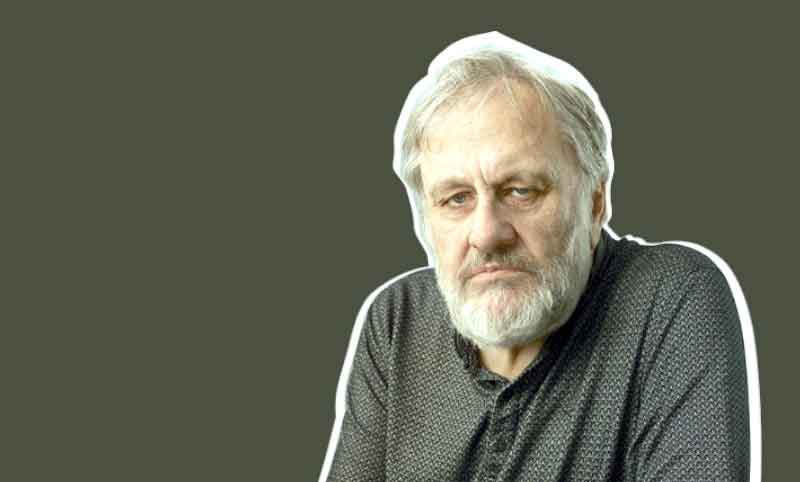
Slavoj Žižek, drawing upon Adam Phillips’s reflections on psychoanalysis, targets two established clichés concerning what analysis is supposed to achieve. The first is the belief that psychoanalysis represents a deeper and more radical version of the ancient Greek injunction to “know thyself.” The second is the expectation that analysis will reduce suffering by explaining trauma, bring relief to the individual, and enable a greater enjoyment of life.
Within the conception of psychoanalysis Žižek attributes to Phillips, neither of these aims occupies the centre of treatment. Indeed, the individual’s continual attempt to understand themselves and measure how they feel may itself be part of the problem that needs to be resolved.
When a person investigates the hidden cause of every action, tries to explain every emotion through an event from the past, and aims to construct a complete story about themselves, they do not move beyond the ego. On the contrary, they transform the self into the sole subject of life.
Psychoanalysis is therefore not an archaeological excavation uncovering a true self hidden within the inner world. The thought Žižek takes from Phillips is much more severe: analysis succeeds when the person can finally forget “the nonsense called the self.”
Forgetting here does not mean erasing the past or becoming unconscious of oneself. It means being freed from the obligation to explain and decipher oneself continually.
The Pathology of the Desire for Self-Knowledge
The widespread image of psychoanalysis assumes that a coherent self exists within the person and can be discovered through sufficiently attentive observation. Present fears, desires, failures, and relationships are connected to past traumas. Analysis reveals these connections and gathers the scattered fragments of life into a coherent narrative.
The person thereby learns why they behave as they do, what they truly want, and which events have made them who they are today.
Žižek’s objection, developed through Phillips, concerns not only the truth of this narrative but the belief that complete knowledge about oneself would necessarily be therapeutic. No matter how thoroughly a person narrates their life story, they remain at the centre of that story.
Every new explanation can add another layer to the structure built around the self. While attempting to understand themselves, individuals may become incapable of ceasing to concern themselves with themselves.
Questions such as “Who am I?”, “What do I really want?”, and “Why do I always do the same thing?” can eventually cease to lead toward clarity and become forms of obsessive thought circling around the self.
The pathology Žižek identifies is not that the individual knows nothing about themselves. It is that the desire to know oneself comes to occupy the whole of life.
Phillips’s criterion for psychoanalysis is therefore not the individual’s eventual ability to explain their entire past. Analysis should allow the self to cease being a great mystery that must be solved.
A person may continue to know themselves, consider the reasons for their actions, and recognise the traces of the past within present life. Yet none of these needs to become life’s ultimate purpose.
Žižek’s expression “forgetting oneself” becomes important precisely here. To forget oneself does not mean losing one’s personality or dissolving into the aims of others. It means ceasing to treat one’s moods, suffering, and desires as the measure of everything.
Only when the self ceases to be a continual problem for itself can the person become genuinely concerned with something else.
Art, science, politics, and love then cease to function as mirrors through which the self expresses itself and become fields possessing value in their own right.
The success of psychoanalysis appears not when the individual finally finds themselves but when they can stop searching for themselves everywhere.
Relief Is Not the Measure of Psychoanalysis
The second cliché addressed by Žižek is the belief that psychoanalysis aims to reduce suffering and bring comfort to the patient. The individual narrates a trauma, understands the reason for their distress, and is relieved of the burden through this knowledge. Therapy is consequently imagined as a technique that makes life more bearable and pleasurable.
Phillips, however, suggests that an analyst may become uneasy when a patient immediately feels much better after a good analytic session.
This does not mean that psychoanalysis seeks to cause pain or considers relief worthless. The problem lies in measuring the success of treatment solely through how calm or comfortable the patient feels after a session.
If the individual continually asks, “Am I suffering?”, “Am I enjoying life?”, and “Do I feel well?”, they continue to place themselves at the centre of life even when their suffering has diminished.
Every event is evaluated according to its effect upon the individual’s mood. Relationships, work, and ideas acquire significance according to the amount of pleasure they provide.
Relief therefore does not necessarily move the individual beyond the ego. It may merely make their relationship with the ego more comfortable.
What Žižek and Phillips oppose is not concern for suffering but the reduction of life to a personal calculation between pain and pleasure.
Whether a person suffers is undoubtedly important, but this question cannot by itself determine what is worth doing.
The value of scientific work, political struggle, artistic production, or love does not arise from the fact that these activities continually make a person feel good. They may be exhausting, unsettling, and sometimes painful. They may nevertheless carry a significance greater than the individual’s temporary emotional condition.
What Phillips calls “sublime” things are not objects that magically eliminate suffering. Their importance lies in enabling the individual to cease treating personal pain and pleasure as the sole measure of life.
Analysis does not transform a person into a being without suffering. It releases them from the condition of being able to do nothing except think about how to reduce their suffering.
The individual can then attend not only to how they feel but also to what the work, person, or cause before them demands.
From the Self to an External Cause
Within the conception of psychoanalysis described by Žižek, the “external cause” names this movement beyond the self.
An external cause is not simply a duty imposed upon the individual from outside or an abstract authority before which they must sacrifice themselves. It is an aim—such as art, science, invention, political struggle, or love—that the person regards as more important than their own mood.
The individual does not engage with this aim merely to express themselves or feel better. They become attached to it because they consider it valuable in itself.
The artist’s work is not simply an instrument for expressing an inner world. The artwork carries problems and forms that exceed the artist’s personal condition.
The scientist’s research is not pursued merely to satisfy curiosity or experience a sense of achievement. The problem requiring a solution acquires a weight independent of the researcher’s psychological satisfaction.
Love is not merely an experience through which the individual feels loved and valuable. The existence, needs, and freedom of another person disrupt the central position of the self.
An external cause does not mean the disappearance of the self. It means that the self makes genuine room for something other than itself.
Turning outward therefore does not require the denial of inner life. Žižek does not declare it entirely unnecessary to discuss trauma, investigate desire, or reflect upon oneself.
What is criticised is the transformation of introspection into an endless occupation.
When a person believes that they cannot begin anything before completing the task of knowing themselves, life is continually postponed. They must first resolve their past, discover their true desire, organise their emotions, and understand who they are.
Yet the self never becomes completely transparent. The person cannot reach a final explanation of themselves.
Rather than promising such complete knowledge, analysis creates a distance from the demand for it. The individual can live and act without possessing a complete account of themselves.
A person can love, produce, think, and struggle without having entirely deciphered themselves.
Psychoanalysis thereby ceases to be an internal preparation that must be completed before entering the world. It becomes a process through which thought enclosed upon itself opens toward the outside.
Interior, Exterior, and Disgust
Žižek’s reference to disgust reveals another dimension of his critique of introspection.
Disgust, according to him, appears when the boundary between inside and outside is disturbed and something that should remain internal emerges on the outside. The body presents a unified and recognisable form externally. When internal organs, tissues, and bodily fluids become visible, this unity is disrupted.
The disturbing force of the colonoscopy example lies in the person watching their own bodily interior—a region not normally meant to be seen—as an external image upon a screen.
Žižek places this bodily example alongside psychological introspection.
The individual assumes that when the psychic interior is opened, it will reveal a pure, harmonious, and meaningful truth. Yet the desires, contradictions, fantasies, and drives encountered within may fail to form a coherent portrait of the self.
The interior is not a truer and cleaner essence concealed behind the personality visible from outside. It may be fragmented, inconsistent, and disturbing.
The task of psychoanalysis is not to bring all this interior material completely outside and display the individual’s psychic organs before them.
Analysis does not discover the final meaning of every symptom, connect every desire to a single cause, or transform identity into a completed narrative.
It enables the person to accept that something unknown, contradictory, and alien to themselves may remain within them.
When the individual recognises that they do not have to coincide completely with themselves, the need to monitor the inner world continually can also weaken.
Instead of descending ever deeper in search of the “true self,” the person can learn to live with the gaps and inconsistencies within themselves.
At this point, the external cause is not an escape. It is the form through which the individual avoids becoming enclosed within themselves.
The person turns outward not because every inner conflict has been resolved but because they can establish a relationship with the world without waiting for those conflicts to disappear.
Žižek’s account of psychoanalysis through Adam Phillips does not offer a doctrine of self-knowledge that reveals all the secrets of the ego. Nor does it carry the simple therapeutic promise of making the person more comfortable, happier, and better adapted.
The success of analysis cannot be measured by the perfection of the story a person can tell about themselves or by an immediate reduction in suffering.
Another field opens when the individual can stop continually observing themselves, evaluating every action according to their mood, and reducing life to a private calculation between pain and pleasure.
Within this field, art, science, love, and politics cease to be instruments satisfying the needs of the ego. They become external realities in which the person can participate by forgetting themselves.
Psychoanalysis takes the individual into their inner world, but not so that they may remain there forever.
It does so to enable them to live without knowing themselves completely, to become attached to something more important than their own suffering, and finally to remove themselves from the position of being the sole problem of life.
