




What Is Surrealism?
Surrealism is one of the most important and influential artistic movements of the twentieth century. Its theoretical foundations were established with the Surrealist Manifesto, written by the French poet André Breton in 1924. The movement argued that the unconscious should be liberated from the limits of rational thought and expressed directly through art.
Surrealists created a new artistic language through dreams, the unconscious, automatic writing, and chance-based processes. Influenced by Freudian psychoanalysis, Surrealism developed into an artistic and literary movement that sought to explore the repressed dimensions of the human mind.
Principal Characteristics of Surrealism
The Use of the Unconscious in Art
- Dreams, instincts, and unconscious thoughts form the foundations of many Surrealist works.
- Artists sought to liberate imagination by rejecting the conventional rules of reason and logic.
Surreal Compositions and Symbolic Expression
- Unexpected combinations of objects, illogical scenes, and strange figures were frequently employed.
- By disrupting ordinary perceptions of reality, Surrealism encouraged the viewer to think and question.
Automatic Methods and Chance
- Artists attempted to suspend conscious control and concentrate on spontaneous creative processes.
- Techniques such as collage, automatic drawing, and frottage were frequently used.
Psychoanalysis and the Influence of Freud
- Sigmund Freud’s theories concerning the unconscious, dream interpretation, and desire became important sources of inspiration for Surrealist artists.
- Repressed desires and fears were treated symbolically within works of art.
Unexpected and Striking Imagery
- Everyday objects were presented in unusual forms and contexts, producing effects directed toward the unconscious.
- Surrealism created a new language by establishing a bridge between reality and imagination.
Major Surrealist Artists and Their Works
Salvador Dalí (1904–1989) — Master of Surrealist Painting
The Persistence of Memory (1931)
- One of Dalí’s best-known works, The Persistence of Memory uses melting clocks to symbolize the relativity of time and the fluidity of the unconscious.
- Its timeless atmosphere and dream aesthetic made it one of the defining visual expressions of Surrealism.
René Magritte (1898–1967) — The Artist Who Played with the Perception of Reality
The Son of Man (1964)
- Magritte brought ordinary objects together in unexpected ways, encouraging the viewer to question perception itself.
- The work, showing a man whose face is obscured by an apple, invites reflection upon mystery, identity, and perception.
Max Ernst (1891–1976) — Surrealist Collage and Experimental Techniques
Europe After the Rain (1942)
- Ernst’s works employing frottage, or rubbing techniques, reflect Surrealism’s interest in chance and creative processes rooted in the unconscious.
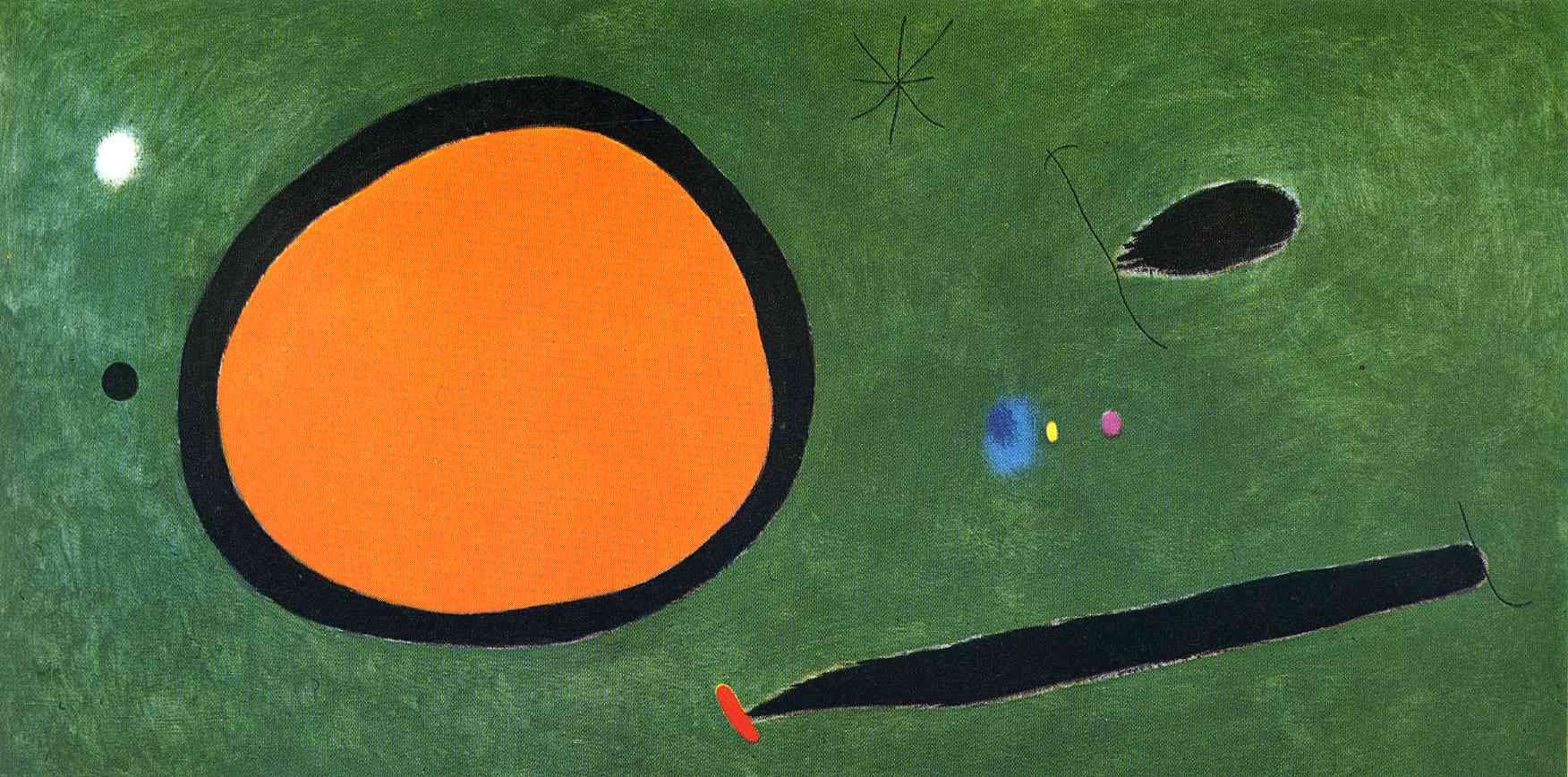
Joan Miró (1893–1983) — Surrealism through Color and Form
Improvisation (1927)
- Miró explored the capacity of abstract forms, colors, and free association to express the unconscious through art.
Man Ray (1890–1976) — Surrealist Photography
Tears (1932)
- Through photography and object-based art, Man Ray embraced Surrealist modes of expression and redefined traditional artistic forms.
The Importance of Surrealism in Art History
Surrealism enabled the exploration of irrational and unconscious processes within art.
By establishing a relationship between art and psychoanalysis, it carried both individual and collective dimensions of the unconscious into artistic production.
The movement influenced numerous artistic fields, including painting, literature, cinema, sculpture, and photography.
It also became an important source of inspiration for conceptual and experimental approaches within modern and contemporary art.
By supporting freedom and creativity in art, Surrealism helped open the way toward new artistic movements.
Differences Between Surrealism and Dada
Although Dada and Surrealism are frequently confused, there are fundamental differences between the two movements:
- Dada embraced chaotic and chance-based artistic strategies, while Surrealism concentrated more directly on dreams and the unconscious.
- Dada functioned as a protest movement that rejected art, while Surrealism sought to carry art into a different dimension.
- Surrealism developed through aesthetic concerns and unconscious imagery, whereas Dada adopted a more absurd and destructive attitude.
The Influence of Surrealism Today
Surrealism continues to exert influence across contemporary art, cinema, graphic design, fashion, and advertising.
Directors such as David Lynch and Guillermo del Toro have incorporated Surrealist aesthetics into cinematic narrative.
Contemporary artists also use themes of the unconscious and Surrealist elements within digital art, virtual reality, and artificial intelligence art.
Surrealism therefore continues to exist as a powerful creative movement that pushes against the boundaries of art in the modern world.
By understanding art as a reflection of the unconscious, Surrealism carried artistic creativity into an entirely new dimension. Through dreams, Symbols, and illogical scenes, it broke with Classical conventions and became one of the most distinctive and influential movements of modern art.
The movement continues to inspire artists, filmmakers, and writers even today.
