




The Problem of Nietzsche’s Status as a Philosopher
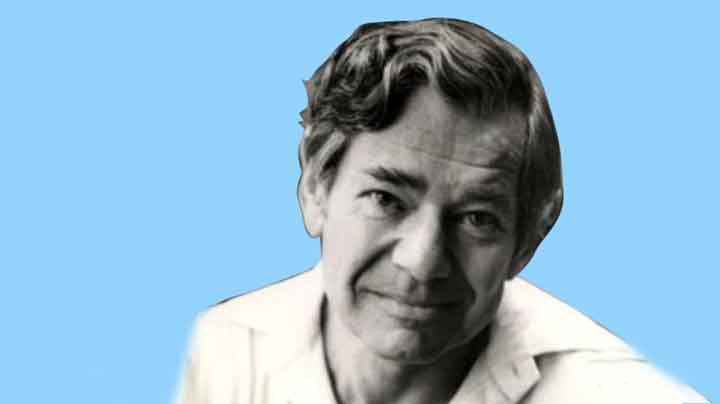
In his 1950 work Nietzsche: Philosopher, Psychologist, Antichrist, Walter Kaufmann presents one of the principal objections raised against recognising Nietzsche as a philosopher:
“It is immediately apparent that Nietzsche is stylistically far superior to Kant and Hegel; yet at the same time he seems to represent a sharp decline as a philosopher—and there have been many who did not regard him as a philosopher at all—because he had no ‘system.’ This argument, however, is hardly convincing. Schelling and Hegel, Spinoza and Aquinas had systems; in the cases of Kant and Plato, the term is far less applicable; and among the many important philosophers who certainly had no systems, it is enough to mention Socrates and several of the pre-Socratic philosophers. Not only can Nietzsche be defended on this point—how many philosophers today possess a system?—but it must also be added that he had strong philosophical reasons for not constructing one.”
The central problem Kaufmann addresses in this passage is not whether Nietzsche’s ideas possess order or coherence. The real question is whether constructing a system can be regarded as a necessary condition for being a philosopher.
Nietzsche’s works are not organised within a single conceptual architecture comparable to Kant’s three Critiques, Hegel’s progression through logic, nature, and spirit, or Spinoza’s geometrical method. Yet the absence of such a system does not, by itself, demonstrate the absence of philosophical thought.
The Distinction between Philosophy and System
Kaufmann’s examples demonstrate that the concept of “system” cannot be applied to every philosopher in the same manner.
In thinkers such as Schelling, Hegel, Spinoza, and Aquinas, it is possible to identify a comprehensive structure connecting different fields of philosophy. Being, knowledge, morality, nature, and politics are organised according to common principles within a conceptual whole.
Plato’s thought, however, develops through dialogues. Instead of offering the uninterrupted exposition of a single doctrine, the dialogues contain questions, counterarguments, dramatic situations, and different speakers. Socrates left no written work. A considerable number of the pre-Socratic philosophers have reached us only through fragments and reports preserved by later authors.
Their place in the history of philosophy is not annulled because they did not leave behind closed systems.
Kaufmann therefore distinguishes between two ideas: possessing a philosophical system and possessing philosophical problems, concepts, and intellectual continuity are not the same thing. The fact that a philosopher does not derive every claim from a single first principle does not mean that the philosopher’s thought is accidental or entirely fragmented.
A system is one possible form of philosophy, but it is not the universal criterion by which philosophy must be recognised.
Nietzsche’s Objection to the Will to System
The more important claim in Kaufmann’s passage is that Nietzsche’s failure to construct a system was not merely the result of a personal writing habit. Nietzsche had a direct philosophical suspicion of the very idea of system.
His statement in Twilight of the Idols—“The will to a system is a lack of integrity”—is one of the clearest expressions of this suspicion.
This proposition does not mean that Nietzsche rejected every form of conceptual order, intellectual consistency, or sustained thought. His target was the tendency to present a structure established from a particular perspective as though it were the necessary order of reality itself.
The system-building philosopher may present personal starting points, values, and preferences in the form of universal principles. Once organised into a comprehensive architecture, a particular interpretation may conceal the historical and evaluative conditions from which it emerged.
Especially in Beyond Good and Evil, Nietzsche does not examine philosophical doctrines merely as collections of logical propositions. He also asks which drives motivate a philosopher, which values the philosopher elevates, and what form of life a particular doctrine defends.
A philosophical system is therefore never completely independent of the historical, psychological, and personal position of the thinker who constructed it.
Nietzsche’s objection concerns the possibility that a system may cease to present itself as an interpretation and instead claim the status of absolute truth.
Aphorism and Nietzsche’s Mode of Writing
The aphorism occupies a central place in Nietzsche’s works. Texts such as Human, All Too Human, Dawn, The Gay Science, and Beyond Good and Evil consist largely of short, concentrated sections.
The aphoristic form, however, does not indicate that Nietzsche’s thought is incomplete or arbitrary.
In the preface to On the Genealogy of Morality, Nietzsche explains that reading an aphorism does not mean that it has been fully understood. An aphorism must be interpreted, reconsidered, and examined within different relations and contexts.
The aphorism is therefore not a brief summary of a doctrine already prepared in advance. It is a concentrated form of thought that demands active interpretation from the reader.
Within a closed system, the place of each concept has already been determined. In an aphorism, the same problem can be approached in different works, under different conditions, and from different directions.
Nietzsche’s writings do not follow the linear organisation of a textbook. Thought does not proceed from a single point of departure towards necessary conclusions. Instead, it is repeatedly reconstructed around particular problems.
This form of writing also changes the position of the reader. The reader is not expected simply to receive conclusions but to establish connections, recognise tensions, compare perspectives, and interpret what remains unstated.
The aphorism is therefore part of Nietzsche’s philosophical method rather than an accidental stylistic preference.
Perspective and the Problem of System
Nietzsche’s opposition to system is also connected with his understanding of knowledge.
For Nietzsche, thought is not the activity of a neutral subject occupying no particular position. Every act of knowing proceeds from a historical situation, a bodily existence, a set of interests, and a particular mode of evaluation.
This approach is generally described through the concept of perspectivism.
Perspectivism is not the simple relativist claim that all views are equal. Nietzsche’s point is that thought cannot entirely eliminate the perspective from which it operates. There is no view from nowhere, no knowledge wholly detached from the conditions of the knower.
Understanding may be expanded through the comparison and multiplication of perspectives. A closed system, by contrast, may elevate one particular perspective into a final and all-encompassing position.
The changes of viewpoint within Nietzsche’s writings make it possible to examine the same problem from several directions. His style and his philosophical content cannot therefore be separated from one another.
Aphoristic and perspectival writing functions as a method for preventing a single interpretation from becoming absolute.
Nietzsche does not seek to escape perspective. He seeks to increase the capacity of thought by bringing different perspectives into tension with one another.
Genealogy and Historical Becoming
Another philosophical reason for Nietzsche’s refusal to construct a system can be found in his genealogical method.
On the Genealogy of Morality examines moral concepts not as unchanging essences but as values formed through historical processes.
Concepts such as “good,” “evil,” “guilt,” “punishment,” “conscience,” and “responsibility” have not possessed the same meanings from the moment of their emergence. They have been transformed within different social relations, struggles for power, and modes of evaluation.
The present function of a concept may differ from the function it possessed when it first emerged.
Genealogy therefore investigates how concepts were formed rather than placing them within fixed definitions. Nietzsche’s subject is not a realm of immutable essences but the history of interpretations, practices, and values.
To stabilise these concepts within a completed system would risk freezing once again the historical movement that genealogy reveals.
Systematic philosophy often seeks identities beneath change. Genealogy asks how the appearance of identity was itself produced through change.
This method also prevents the origin of a value from being confused with its later justification. A practice may survive while acquiring new meanings. Different powers may appropriate the same concept and use it for different ends.
The genealogical object cannot therefore be fully represented through a static conceptual architecture.
Philosophical Doctrines as Symptoms
Nietzsche’s critique of systems is closely connected with his treatment of philosophical doctrines as symptoms.
A doctrine does not reveal only what a philosopher explicitly argues. It may also reveal the philosopher’s physiological condition, moral preferences, fears, desires, and relation to life.
Nietzsche therefore asks not only whether a proposition is logically defensible but also what kind of life requires that proposition to be true.
A metaphysical system may express a desire for stability in the face of becoming. A moral system may universalise the needs of a particular human type. A theory of knowledge may conceal a moral valuation of truth.
This does not reduce philosophy to biography or psychology. It enlarges philosophical analysis by including the conditions under which concepts and arguments are produced.
The demand for a system may itself become an object of philosophical investigation. The wish to place reality within a complete order may express a desire to eliminate uncertainty, plurality, and becoming.
Nietzsche’s refusal of system is therefore connected with his suspicion that the form of systematic completeness may conceal the needs of the thinker beneath the supposed necessity of the argument.
The Will to Truth
Nietzsche’s writings repeatedly return to the problem of the will to truth.
Traditional philosophy often assumes that the pursuit of truth is self-evidently valuable. Nietzsche asks why truth is valued and why error, appearance, or uncertainty should always be regarded as inferior.
This question does not simply reject truth. It transforms the value of truth into a philosophical problem.
A closed system may conceal the evaluative decision underlying its commitment to truth. It may present the will to truth as a neutral rational necessity rather than as a historically formed value.
Nietzsche’s critique brings this concealed valuation into view. Philosophy must examine not only whether its claims are true but also what kind of will is expressed through its demand for truth.
The absence of a system allows Nietzsche to preserve this question rather than resolving it prematurely. His thought does not establish a final doctrine of truth that would escape the critique directed towards previous doctrines.
Ressentiment, Nihilism, and the Revaluation of Values
Nietzsche’s works possess a strong conceptual continuity despite their lack of a closed system.
Problems such as the will to truth, the origins of morality, nihilism, ressentiment, conscience, the body, relations of power, and the revaluation of values reappear throughout different periods of his writing.
These concepts are not derived from a single foundational principle. Yet they are not completely independent of one another.
The critique of truth is connected with the philosopher’s perspective. The problem of perspective is connected with the formation of moral values. The formation of values leads to genealogy, ressentiment, nihilism, and the possibility of revaluation.
Ressentiment explains how reactive forces may produce moral values by transforming weakness into virtue and powerlessness into moral superiority. Nihilism identifies a historical condition in which the highest values lose their binding force. The revaluation of values asks whether new forms of evaluation can be created after the collapse of inherited foundations.
These problems form a field of relations rather than a deductive system.
Nietzsche’s unity is therefore not the unity of a structure in which every proposition is assigned a permanent position. It is the unity of recurring questions, conceptual transformations, and sustained confrontations with the problem of value.
Intellectual Coherence without a System
Nietzsche’s refusal to construct a closed system does not mean that his works lack continuity.
There are significant changes between his early, middle, and later writings. Yet these changes do not prevent the same fundamental problems from being reconsidered through different methods.
The early engagement with tragedy and Greek culture, the middle-period critique of metaphysics and morality, and the later analyses of genealogy, nihilism, and revaluation are not identical. Nevertheless, they participate in an ongoing examination of culture, truth, morality, and the possibilities of human transformation.
Kaufmann’s defence does not depend upon retrospectively attributing a system to Nietzsche. His aim is to show that the absence of a system is not identical with philosophical inconsistency.
Nietzsche’s coherence lies in the movement of his questions rather than in their closure.
His concepts do not form a rigid building. They constitute an interconnected field in which each problem alters the meaning of the others.
Conclusion
Walter Kaufmann’s defence of Nietzsche rests upon the distinction between a philosopher and a system-builder.
Many foundational figures in the history of philosophy did not leave behind closed systems. To exclude Nietzsche from philosophy solely because he did not construct one would therefore be historically inconsistent.
Nietzsche’s case is also shaped by his own critique of the idea of system. He argues that thought arises from a particular perspective, that philosophical doctrines are not independent of values, and that moral concepts are historically formed.
Aphorism, perspectivism, and genealogy are the principal forms through which this approach operates in his writings.
Nietzsche has no system, but his works possess conceptual and problematic continuity. As Kaufmann demonstrates, the absence of a system does not entail that Nietzsche was not a philosopher.
On the contrary, Nietzsche transforms the system itself into a philosophical question:
How can thought address the plurality, becoming, and transformation of reality without enclosing them within a completed structure?
