




Introduction to the Artist
As a modernist who connects the gaze in Turkish cinema to everyday rhythm and the climate of space, Nuri Bilge Ceylan distributes the “event” within duration and silence rather than heightened conflict. In his films, the provinces are neither folkloric scenery nor caricature but a laboratory that measures the responsibility of the gaze. Along the line extending from Distant to Once Upon a Time in Anatolia, and from Winter Sleep to The Wild Pear Tree, the tension between the subject’s desire to justify himself and the world’s resistance is shown through the ethics of long takes and slow editing. About Dry Grasses stands at one of the sharpest intersections of this line: the inner voice of a teacher whose idealism has long since eroded collides with the gaze of women possessing a strong knowledge of survival, within the dull light of winter and the fragile rhythm of drying grass.
Introduction to the Film and Composition
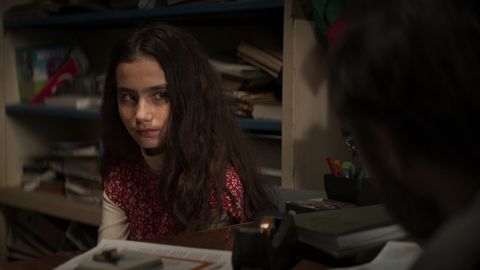
The film takes place during a provincial winter: Samet, a teacher moving between the daily weight of snow, remote village roads, the heavy smoke of the stove, and the school’s narrow corridors, is consumed by the patience required while waiting for a transfer. As the professional routine is woven through class photographs and the empty rhythm of “activities,” Samet’s inner speech continually places him at the centre. Nuray—a woman who has returned from the city to the provinces and carries knowledge of life through her body and thought—and the young student Sevim form two separate thresholds within the narrative: one opens the ethical demand of an adult gaze, while the other exposes the blind spot of a man who struggles to assume responsibility for looking.
The film moves along the line of investigation, relationship, and crossroads; the climax is heard not within an elevated confession but within a silence in which the gaze changes position and the subject can no longer carry his own narrative. The composition relies upon static, long takes indoors and open views of the winter landscape outside. Snow is not merely a thematic covering but an uninterrupted reflective surface: whose light will we return?
Three-Level Analysis Through Panofsky’s Method
Pre-iconographical Interpretation
A minibus moving slowly along snowy roads; broken chalk in a classroom heated by a stove, damp noticeboards, and faded maps; yellowed fluorescent light in the teachers’ lodgings; melted snow water upon tiles; a tea glass held by ungloved hands; a suit hanging upon the wall; watercolour boxes and a half-finished painting of a seagull; isolated streetlights during a night walk; a heavy sofa in the sitting room and cold daylight upon the curtain; the fragile sound of drying grass beside a frozen stream; a smile freezing at the moment a photograph is taken; investigation petitions, a seal, and a wet signature.
Iconographical Interpretation
The motifs intersect the province’s bureaucratic rhythm with the subject’s attempt to construct a narrative: the photograph is an instrument for “possessing” the image and freezing meaning; the investigation document is the cold language of petitions that transfers an ethical issue to procedure; the tea glass and stove are everyday objects that equate the promise of intimacy with routine; drying grass is a natural metronome marking fragile lines of life within the seasonal cycle.
The teacher–student–activist triangle opens the relationships among power, desire, and responsibility through habits and minor transgressions rather than romantic gestures. The motifs of road, transfer, and centre recall that the act of “leaving” is established not through freedom but often through the obligation to continue a narrative.
Iconological Interpretation
At a deeper level, the film collapses the “male saviour’s gaze” within its own internal monologue. Samet’s self-justifying language is tested by the material resistance of the provinces—snow, distance, heat, and documents—and by the ethical demand of counter-gazes—Nuray’s genuine politics and Sevim’s flexible but unbroken intuition. Without transforming the provinces into a melodrama of “no way out,” Ceylan slows the subject’s insistence upon keeping himself at the centre; truth opens not within major confessions but within encounters searching for measure.
The film does not punish “corrupted idealism”; it surrenders it to the slowness of listening. The gaze thereby ceases to be a curiosity that produces no knowledge and becomes an ethical practice demanding responsibility.
Representation — Gaze — Void
Representation
Ceylan does not heighten emotion but distributes it across the duration of work. Samet’s dissatisfaction is represented not through an explosive scene but through chalk breaking in the classroom, a dry sentence reaching his lips while taking a photograph, and colourless light falling upon the curtain in the late afternoon. Nuray’s politics is staged not through elevated slogans but through the traces carried upon her body and through everyday practice; even her smile functions like a scale, balancing the sentence. Sevim’s young gaze appears as an effort to find a place without drifting into a romanticisation of “innocence”; while representation brings the rhythms of these bodies into collision, it does not pass judgement on their behalf.
Gaze
Whom are we looking at? Primarily Samet’s internal gaze occupying the field; yet at critical moments the film withdraws from fragmented subjectivities and carries the gaze towards witnessing. Who positions us? The camera establishes secondary frames through doorways and windows; the viewer is neither admitted completely inside nor left outside. Particularly during the long conversations with Nuray, this distance removes the gaze from its position as a centre distributing power and opens a field in which sentences encounter one another.
How is power distributed? Institutional language—the headmaster’s office, petition, and investigation—is invisible but effective; individual power changes hands through knowledge and gesture. Nuray’s gaze dismantles and reconstructs Samet’s narrative; Sevim’s gaze produces both defence and possibility. The film transforms the gaze from an instrument of judgement into an instrument of measure.
Void
There are no major explanations; moments of decision generally appear within the dullness of winter light and when sound withdraws. The void enlarges not the question “What happened?” but “Who made room for whom, and how?” The visual clues are clear: sound cut by the wind upon snow-covered land, the movement of a curtain in the empty sitting room of the teachers’ lodgings, and the delicate suspension between smile and silence during a photograph. These voids are established not to delay melodrama but to leave an ethical share; the viewer abandons the rapid fixing of the gaze and carries delay.
Style
Wide, static shots carry dialogue not through music but through the acoustics of space: the crackling of the stove, the ticking sound of snow, and footsteps multiplying within the corridor. The colour regime relies upon winter’s matte palette and yellowed patches of light inside; the whiteness outside does not excessively brighten the frames but produces a form of visual silence. The editing cuts not because the sentence has ended but because the gesture has ended. Rather than approaching faces, the camera records distance; when close-ups arrive, they are used not to distribute judgement but to record trembling. By avoiding confining the character within a “psychological scheme,” this style transforms the duration of seeing into an ethical possibility.
Type
Samet: A figure who nourishes his insistence upon remaining at the centre through intelligence and irony, yet whose distance between language and responsibility grows with every encounter.
Nuray: She takes control of the scene’s tempo through her knowledge of survival and political intuition; she is a person not of speech but of measure.
Sevim: A threshold figure showing that fragility is not passivity and that youth can sharpen the gaze.
The school administration: It represents the weight of documents and procedure; its cold courtesies function like the acoustics of the space.
Secondary figures such as colleagues, neighbours, and the minibus driver: They record the rhythm of the provinces through duration and gesture without reducing it to a “character mask.”
Symbol
Snow: Not merely an atmosphere but the surface upon which the gaze returns; it reflects excessive light, shortens sentences, and makes breath visible.
Photograph: It arrives with the promise of a frozen “truth,” yet throughout the film it becomes perceptible that photography can also be an instrument of power.
Drying grass: Fragile lines of life changing with the season; they break even when touched gently but continue to cover the earth.
Classroom noticeboard and chalk: They carry the difference between the theatre of education and the sound of friction produced by real life.
Petition and seal: As instruments transferring the ethical to procedure, they represent the desire to close the void; the film instead proposes sharing the void rather than closing it.
Explicit Identification of the Art Movement
Ceylan’s cinema carries a local current of slow cinema and minimal realism: the plot is constructed through duration rather than speed, acoustics rather than music, and the economy of the gaze rather than psychology. Within this line, About Dry Grasses overturns two familiar assumptions about provincial cinema—romantic glorification and caricatured pessimism—and processes Visual Dialectic through Representation, Gaze, and Void with modernist openness. Panofsky’s layered thinking carries iconography without falling into folklore and iconology without escaping into grand thesis statements: meaning opens within minor gestures upon the surface and the climate of space.
Conclusion
About Dry Grasses does not narrate a tale of salvation; it proposes a change of position. A gaze wishing to remain at the centre loosens when it listens to the rhythms of others; truth appears not within an elevated confession but within an attention capable of carrying delay. The film constructs the provinces not as a “room without an exit” but as a field in which the gaze can take measure. As Samet’s narrative fades, the gazes of Nuray and Sevim do not close the void but share it. This is the ethical sentence particular to Ceylan’s cinema: “To see is to slow down before passing judgement.” The snow melts and the grass breaks again, but the gaze has learned to reduce its speed.
