




Thinking Historiography Together with Social Structure
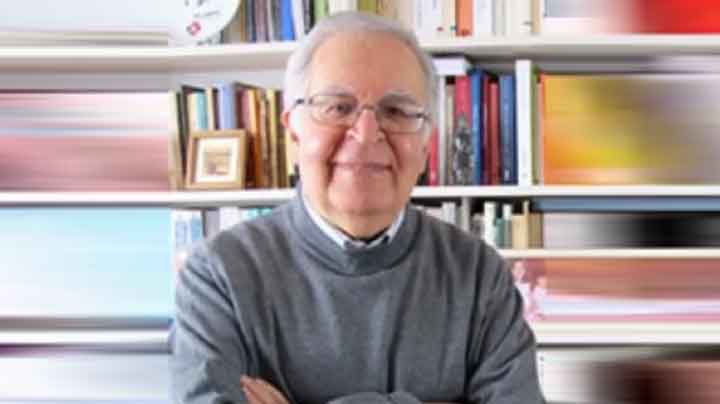
Taner Timur is a historian, political scientist, and academic who examines the historical transformation extending from the Ottoman Empire to the Republic through the connections among political institutions, relations of production, social classes, ideologies, and intellectual movements. He opposed forms of historiography in Turkey constructed around official narratives, hero-centred chronologies, and immutable conceptions of identity, and drew upon the conceptual resources of philosophy and the social sciences in order to explain the past. The central question uniting his work concerns the social structures within which historical events emerge and the ways those structures shape ideas, institutions, and political struggles.
Born in Sivas on 7 October 1935, Timur completed his primary and secondary education there before attending Haydarpaşa High School. Between 1954 and 1958, he studied at Ankara University’s Faculty of Political Sciences. After graduating, he began his academic career at the same faculty; he became associate professor in 1968 and professor in 1979. The Faculty of Political Sciences, with its combination of law, political science, and social sciences, provided the ground for his interdisciplinary approach to historical problems. During his student years, following the debates surrounding the journal Forum allowed him to establish an early connection between academic research and contemporary political thought.
The periods he spent in Paris were decisive in his intellectual development. During the 1960s and 1970s, he encountered debates in French thought surrounding structuralism, Marxism, existentialism, and new historiography, while continuing his research in the extensive collections of the Bibliothèque nationale de France. Following the military coup of 12 September 1980, he left his university position and settled once again in Paris. For approximately twelve years, he worked on Ottoman history, Western thought, and social theory; he returned to the Faculty of Political Sciences in 1992 and continued teaching until 2002. This long period of research broadened the intellectual foundation of his books, in which Ottoman history is examined together with economic structure, the formation of identity, and European representations of the East.
Taner Timur is not a systematic philosopher in terms of his professional identity. His relationship with philosophy rests on the critical examination of the concepts and explanatory models used by historians. Historical knowledge is never simply the transmission of the past exactly as it was; the historian selects documents, establishes relationships among events, and interprets them through particular concepts. Timur’s work argues that this conceptual mediation should not be concealed. The historian cannot escape theory, but neither should theory be transformed into a closed schema that forces the past toward a predetermined conclusion.
Ottoman Social Order and the Problem of Identity
The fundamental orientation of Taner Timur’s Ottoman studies is to move beyond a political chronology organised around sultans, wars, and administrative regulations. Osmanlı Toplumsal Düzeni examines the periods of foundation and expansion through the relationships among conquest, land organisation, relations of production, state organisation, and social stratification. It does not merely describe how the Ottoman state expanded; it investigates the economic and social order that this expansion produced.
Within this approach, the state is not an independent and ahistorical force standing above society. Military organisation, taxation, land use, peasant production, and the position of the ruling stratum are parts of the same historical structure. Timur neither treats the Ottoman order as a simple copy of European feudalism nor as an entirely unique model independent of every other form of social development in the world. By approaching Ottoman history comparatively, he considers common processes and specific differences among different social formations together.
Osmanlı Çalışmaları: İlkel Feodalizmden Yarı Sömürge Ekonomisine extends this investigation into the relationship established between the empire and the capitalist world economy. The expansion of capitalist production in Western Europe transformed the internal structure of the Ottoman economy and its foreign trade relations, particularly producing new forms of dependency in the nineteenth century across the state, finance, and international relations. In Timur’s account, the dissolution of the Ottoman Empire is not attributed solely to the failures of rulers, technological backwardness, or moral decline. The relationship between internal structures and the expansion of world capitalism becomes the central object of investigation.
Economic and institutional analysis is not separated from problems of identity and ideology. Osmanlı Kimliği compares the formation of the Ottoman worldview with Western images of Turks and the East. While the European Enlightenment developed concepts of freedom and reason, it also produced hierarchical and exclusionary representations of the East; these representations later influenced how Ottoman intellectuals perceived both themselves and the West. Timur approaches identity not as a cultural essence remaining unchanged throughout history, but as a historical structure formed through social relations, external gazes, and political transformations.
This method creates distance from forms of historiography that place the past at the service of contemporary identity struggles. Ottoman history is neither an entirely lost and perfect order nor a dark period that modernisation simply had to overcome. The historian’s task, before glorifying or condemning the past, is to explain the relations that produced it.
The Turkish Revolution, the Republic, and the Limits of Modernisation
Taner Timur’s first comprehensive study of Republican history is Türk Devrimi ve Sonrası. First published in 1971, the book does not approach the foundation of the Republic merely as a sequence of military victories and legal reforms. The social structure inherited from the Ottoman Empire, class alliances within the National Struggle, the economic choices of the new state, and the formation of political power are considered together. The book’s repeated publication over many years derives from its place among the early studies offering a critical and social explanation of Republican history.
Timur’s understanding of “revolution” does not deny the magnitude of the reforms undertaken; it investigates the social limits of the revolution. The abolition of the sultanate, establishment of a secular legal order, and creation of new educational institutions produced significant ruptures within the political structure. At the same time, important continuities remained within property relations, class structure, and the position of the state in relation to society. Republican history is neither an entirely new beginning detached from the past nor the unchanged continuation of the Ottoman order. This tension between rupture and continuity stands at the centre of Timur’s analysis of modernisation.
Türkiye’de Çok Partili Hayata Geçiş does not accept the period between 1946 and 1950 as a spontaneous and completed stage of democratisation. It examines the foundation of the Democrat Party, the post-war international environment, divisions within the ruling structure, and social demands as parts of the same process. Holding elections is necessary for democratic life, but the quality of democracy must also be evaluated through freedom of political organisation, the functioning of state institutions, and the possibilities for social forces to participate in decision-making processes.
In his later works, the problem of modernisation intersects with the transformation of global capitalism. Küreselleşme ve Demokrasi Krizi and Türkiye Nasıl Küreselleşti? challenge explanations that present neoliberal policies as an inevitable world order. The expansion of financial capital, privatisations, changes in the economic role of the state, and the relationship between political decision-making and international institutions are among the principal processes shaping Turkey’s transformation after 1980. Globalisation is not a neutral convergence in which borders disappear, but a historical stage that restructures the balance of power among capital, the state, and labour.
Philosophy, Social Sciences, and the Historian’s Method
Taner Timur’s views on historiography become clearer in the works in which he establishes a direct relationship with philosophy. Felsefi İzlenimler, Marksizm, İnsan ve Toplum, Habermas’ı Okumak, and Felsefe, Toplum Bilimleri ve Tarihçi form a line of reading that approaches philosophical thought without detaching it from its historical conditions. Philosophical concepts are examined not as closed products of individual genius, but within the scientific, political, and social conflicts of the periods in which philosophers lived.
Felsefe, Toplum Bilimleri ve Tarihçi investigates the long relationship between historiography, philosophy, and the social sciences. Across a line extending from Ancient Greece to the Enlightenment, from Hegel to Marx and modern social theory, it discusses the conditions under which historical knowledge acquired the claim to scientific explanation. History deals with singular events, philosophy constructs general concepts, and the social sciences investigate structures, regularities, and causal relations between these two fields. Timur’s aim is not to transform the historian into a philosopher or sociologist. Rather, he demonstrates that historians must know the theoretical histories of concepts such as “state,” “class,” “revolution,” “ideology,” “identity,” and “modernisation.”
Marxism is one of the important foundations of this method, yet Timur’s historiography does not use economic structure as a single cause that automatically explains every event. Relations of production and class positions determine the boundaries within which ideas arise, but religion, law, culture, and political institutions also participate actively in historical processes. The explanatory power of historical materialism lies in conceiving society as an interconnected totality of relations; its weakness appears when it is used dogmatically and reduces singular events to ready-made formulas. Timur’s engagement with different Marxist traditions, structuralism, Foucault, Althusser, and Habermas forms part of his effort to keep his own theoretical framework open to continual criticism. His publisher also describes him as one of the productive representatives of Marxist thought in Turkey working across history, philosophy, and the social sciences.
His use of literature as a historical source is another aspect of this interdisciplinary method. Osmanlı-Türk Romanında Tarih, Toplum ve Kimlik reads novels not merely as aesthetic works, but as carriers of conflicts and forms of subjectivity that emerged during the transition from Ottoman to Turkish identity. The novel does not replace the historical document; it opens to investigation fears, aspirations, class tensions, and searches for identity that are often absent from official records.
Works and His Place in Turkish Intellectual History
Taner Timur’s extensive bibliography can be read through several principal lines of research. Osmanlı Toplumsal Düzeni, Osmanlı Kimliği, and Osmanlı Çalışmaları focus on the social structure of the empire; Türk Devrimi ve Sonrası and Türkiye’de Çok Partili Hayata Geçiş address the foundation of the Republic and its political regime; Küreselleşme ve Demokrasi Krizi and Türkiye Nasıl Küreselleşti? examine the economic and political transformation of the recent period. Felsefi İzlenimler, Marksizm, İnsan ve Toplum, Habermas’ı Okumak, and Felsefe, Toplum Bilimleri ve Tarihçi address the historian’s theoretical tools and the fundamental debates of modern thought. Toplumsal Değişme ve Üniversiteler considers academic autonomy and the institutional structure of higher education; Türkler ve Ermeniler examines the place of 1915 within historiography and social memory; Yakın Osmanlı Tarihinde Aykırı Çehreler studies figures excluded from official narratives and the plurality of Ottoman society.
Timur’s importance within Turkish intellectual history lies in bringing historiography together with problems of method, concepts, and ideology rather than treating it simply as the collection of information about the past. Against narratives that explain the Ottoman Empire through an immutable civilisational essence, the Republic as an uninterrupted success story, or globalisation as an inevitable model of progress, he preserves the complexity of historical relations. His critical stance does not simply replace one official view with another immutable position; instead, it investigates from which social position and through which conceptual tools every historical narrative is constructed.
Conclusion
Taner Timur’s work reminds us that the past is not a ready-made inheritance arranged according to the political needs of the present. Historical events can be understood only within the economic structures, political institutions, intellectual movements, and international relations that produced them. Since the historian is not a neutral eye merely arranging documents, the sources and limits of the concepts used in historical explanation must also be questioned.
From Ottoman social order to the Republican revolution, from the problem of identity to the university, from Marxism to contemporary philosophy, his studies converge within the same method: analysing history as a structural whole without reducing it to a single cause. What makes Taner Timur important within the History of Turkish Philosophy and Thought is not the construction of a philosophical system, but his continual development of historiography through a critical relationship with philosophy and the social sciences.
